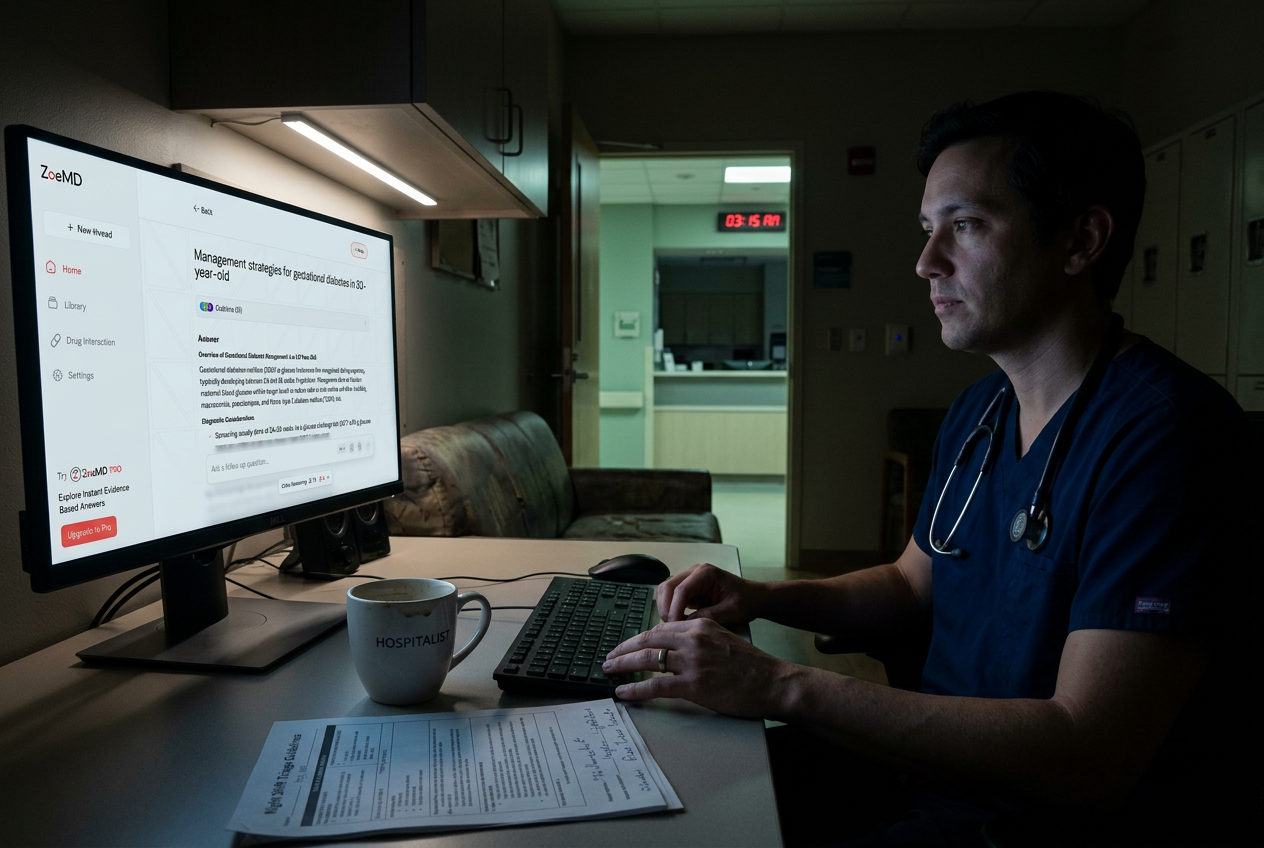

AI Medical Search Engine vs Traditional Medical Search
Compare AI medical search engines with traditional medical search. Learn when clinicians should use each method and how to verify cited evidence safely.

Compare AI medical search engines with traditional medical search. Learn when clinicians should use each method and how to verify cited evidence safely.

Executive summary For healthcare professionals, evidence based medical ai is only useful if it helps answer point-of-care questions without hiding the evidence. Clinicians raise frequent bedside questions, and a large share still go unanswered because of time pressure and search friction. The practical standard is simple: if an AI answer

Modern medicine has changed dramatically over the last century. There was a time when many medical decisions were based primarily on tradition, anecdotal experience, or intuition. While clinical experience remains incredibly important, healthcare today increasingly depends on something stronger: evidence. This is the foundation of evidence-based medicine (EBM), also known

At the point of care, clinicians usually do not need more information. They need the right information, fast. That is why a useful AI clinical protocol library should do more than surface generic summaries. It should help clinicians find protocol-related information quickly, understand the reasoning behind it, and review the

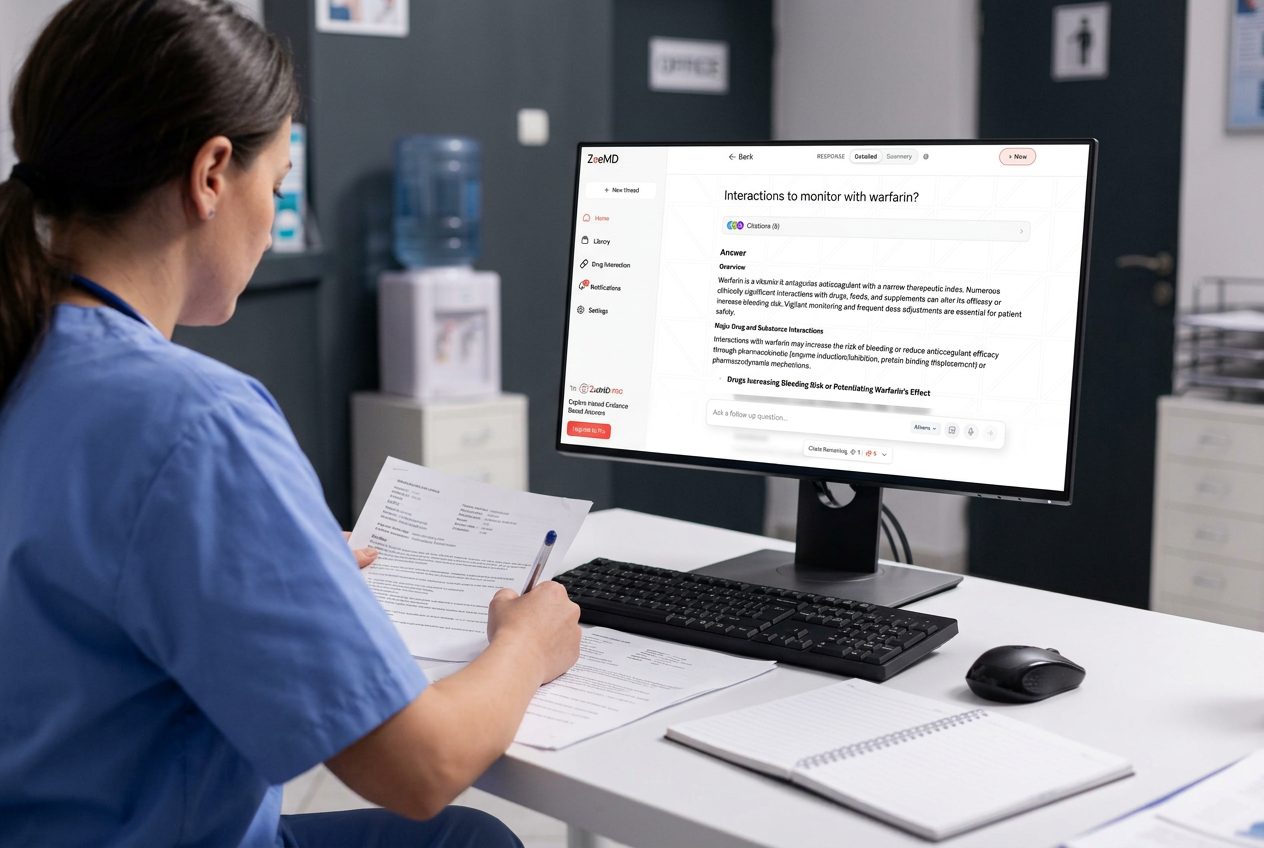
Medication safety errors rarely happen because clinicians do not care. They happen because the prescribing environment is crowded: long medication lists, fragmented records, time pressure, renal dosing issues, duplicate therapies, and interaction alerts that are either too vague or too noisy. That is why an AI drug interaction checker for

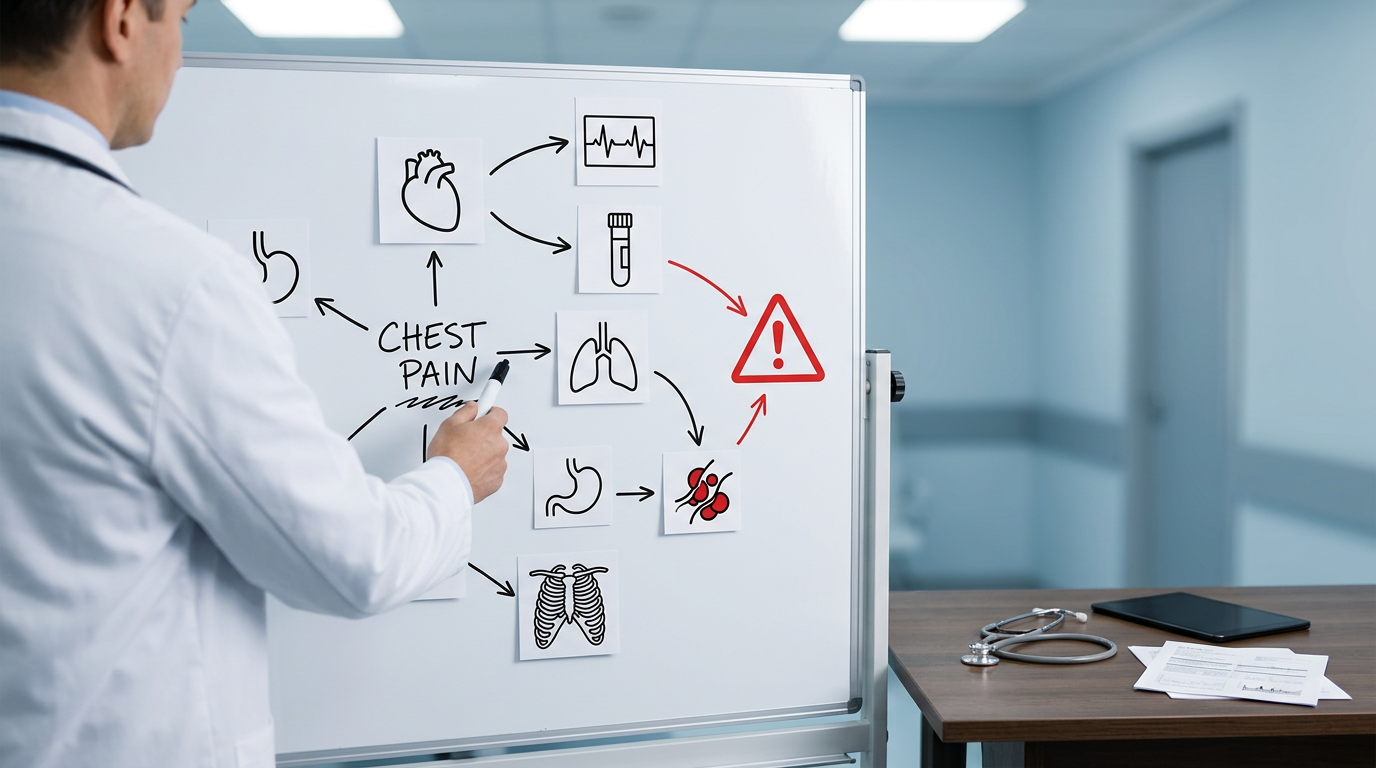
Differential diagnosis is one of the most demanding parts of clinical care. Clinicians must synthesize history, examination, risk factors, medications, prior records, and evolving probabilities under time pressure. This is where ZoeMD is relevant. In differential diagnosis, clinicians rarely need a tool that simply outputs an answer. They need help

TL;DR AI for medical research is most useful for speeding up evidence discovery and summarization. It is least reliable when you ask it to invent facts, replace an appraisal, or make patient-specific decisions. Use AI to reduce time spent searching and organizing evidence, then verify every key claim against primary

Artificial intelligence has entered nearly every industry, but in healthcare, expectations are understandably higher. Accuracy matters. Evidence matters. Context matters. So what exactly is an AI medical assistant in 2026—and how is it different from a chatbot, a search engine, or a traditional clinical decision support system? For clinicians navigating

Modern clinicians are expected to stay fluent in an ever-expanding medical literature landscape—clinical trials, systematic reviews, guidelines, real-world evidence, and post-market data. Yet the pace of publishing has far outstripped the time available to read, appraise, and synthesize it all. This is where the medical research assistant has emerged as

Clinicians today are asked to process more information, faster, and with greater accountability than ever before. Patients present with complex symptoms, overlapping conditions, and expectations shaped by online medical content—while appointment times continue to shrink. In this environment, the AI symptom checker for clinicians is emerging as a powerful clinical